Hello
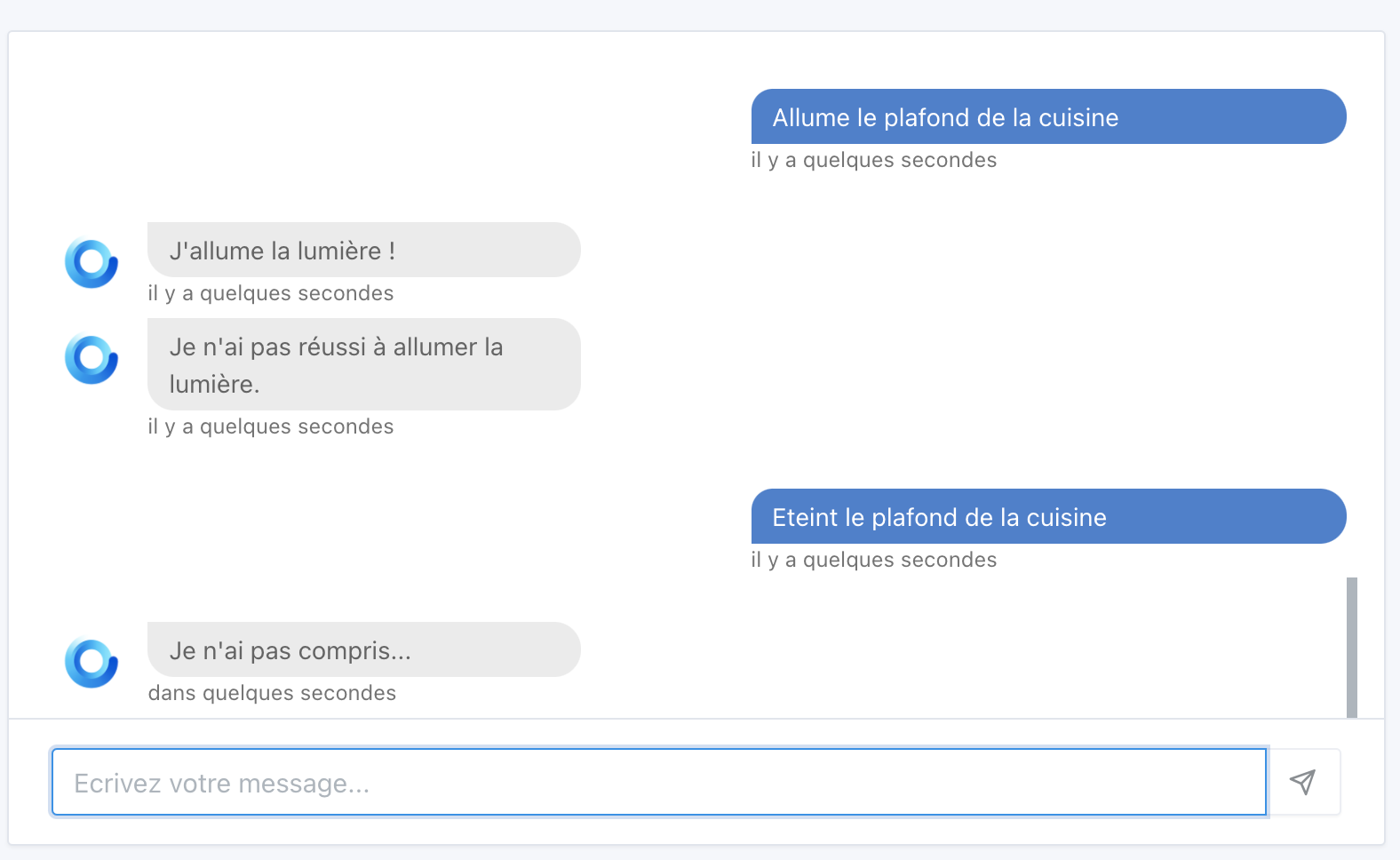
I have a strange behavior via the discussion tab:
Does a ceiling turn off? 
I’m not sure about that 
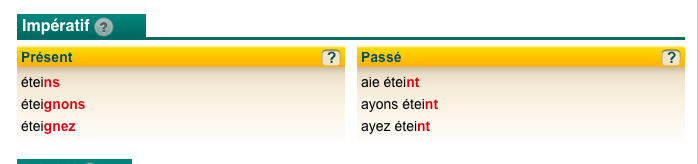
To my mind, the model does not recognize the command « Turn off the kitchen ceiling » because of the spelling mistake on the verb « éteindre » which in the imperative is normally « éteins » with an S 
In the model, the command is:
{
    "label": "light.turn-off",
    "questions": ["Turn off the light in the %room%", "Turn off in the %room%"],
    "answers": ["Extinction des feux...", "I'm turning off the light!"]
}
I don’t remember how much tolerance there is for a spelling mistake in a word in the lib we use (nlp.js), there is tolerance for the general syntax of the sentence but I don’t remember for the « word by word » part.
Given that in your sentence the only word that makes sense is that word and it is misspelled, of course the model does not understand… But I agree that it would be cool if the model were more flexible with errors.
I created an issue to keep the issue in mind, but it’s very very low priority, we have millions of things before that 
Thanks for pointing out my grammar…
But it does solve the issue. Lack of flexibility, all that… 
This is a real bug, not very complicated to fix, I created an issue:
Oh, how nice of him! 
I had the same experience as you @Hamtaro, it’s true, we should relax the tolerance on typos.
Shouldn’t we enrich the sentences we can write in Gladys to have something nicer?
Because we often have « I don’t understand. »
Like: hello, hi, how are you,…
Basic things for now and to be enriched over time.
That’s where it happens
I opened a PR on GitHub, but you need to tell me if what I did is good.
I could add more sentences later.
Don’t forget English
Yes, of course.
I will check for the French version if @pierre-gilles accepts my additions, I will do the English version.
What I find a bit disappointing is that just as everyone is getting used to talking to the Google Assistant… here we are with an « assistant » that doesn’t really understand what we’re saying.
Silly me, I’d like to be able to say:
« turn on the light in the bedroom »
« turn on the bedroom light »
« turn on the light in the bedroom »
« turn on the bedroom bulb »
And for all of that to have just one result… that the damn bulb gets turned on lol
I might be imagining things, but is this feasible?
In my opinion, it’s feasible, you just need to put the different turns of phrase in « questions » to get the desired result.
For example when you tell it:
« questions »: [« Turn on the light in the %room% », « Turn on in the %room% »],
« answers »: [« Turning on… », « I’m turning on the light! »]
And it is the case!
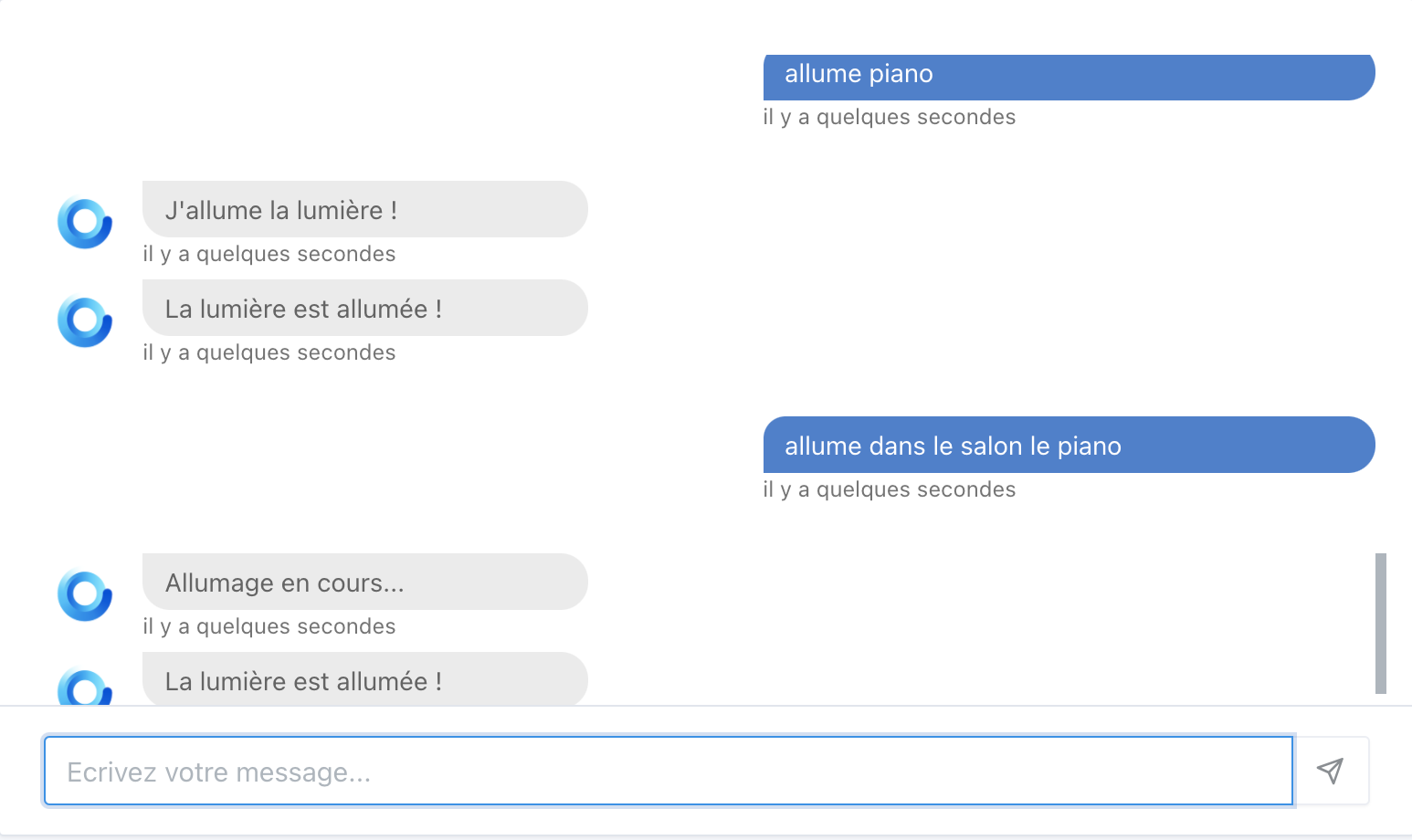
Oh, then I didn’t take the right example, because when I tested the conversation a bit, I got too (too many?) answers: I don’t understand
The issue is the spelling of the trigger, not specifically the articles.
And it’s annoying when you get a rejection for a « éteint » instead of « éteins »…
I am adding sentences to the chat.
I have added lines with jokes that I will enrich over time.
What would you like to ask Gladys?
Heads or tails!
It’s always handy not to make a decision