Let's talk about Gladys V4

I’m going to set up CircleCI today, can you help me with the Docker ARM build part later? :slight_smile: (you’re the expert on that!)

I checked, the Respeaker v2 is Debian, like the Raspberry Pi. In my opinion, it should run without problems (just like Gladys 3 should work on the Respeaker v2 without any issues)

Yes once you’ve pushed my fork :wink:

@VonOx Finally, it will be more likely tomorrow! :smiley:

Today I continued my work on the home screen boxes, I’m almost done with this part.

I notably worked a lot on the « Camera » box, and in particular on the « RSTP Camera » service of Gladys 4.

This is very close to what @piznel did on Gladys 3, I use ffmpeg to read an RTSP stream and keep the most recent image from the cameras in memory (I already talked about this earlier in this topic if you’re interested)

When the frontend loads and requests a camera image, a compressed image is sent to the frontend by Gladys itself (without therefore calling the camera directly), which has the advantage of working even outside the network AND even via the Gateway, and that’s what’s great!

Small Twitter thread about the dashboard in Gladys 4:

https://twitter.com/pierregillesl/status/1131452848321941504

There’s still a bit of work on the boxes, but the main part is done! :slight_smile:

Feel free to ask if you have any questions/feedback.

@Vonox: That’s exactly what I thought, just by switching to CircleCI, without any optimization, the CI tests go from 9 minutes to 4 minutes… And above all, they start instantly vs TravisCI which is often waiting for 2-3 minutes. Travis isn’t what it used to be since they were acquired

And I think we have a lot of optimizations to make, like caching dependency installations (very easy to do with CircleCI)

I merged my part on master (Config => https://github.com/GladysAssistant/gladys-4-playground/blob/master/.circleci/config.yml )

I’ll let you take a look at the Docker build x86/ARM in parallel? :slight_smile:

@AlexTrovato @NilkOne:

I posted a comment on this PR on GitHub regarding my vision of the flow for adding a device for services that are capable of scanning the network:

https://github.com/GladysAssistant/gladys-4-playground/pull/121#issuecomment-495109597

The flow will change a bit, let me know what you think, and if I wasn’t clear, let me know!

@pierre-gilles

With the release of Gladys V4 in a few months, or even weeks, how do you see the communication?
There are many home automation forums and hardware manufacturers.
Like Seeed Studio, Arduino, … wouldn’t it be interesting to post a topic to inform what can be done with such and such material from Seeed or Arduino, or even more, and to give the reader the desire to use Gladys.
This would help grow the community, user feedback, …

Yes I’ll tackle it this weekend

Already in a few weeks, it’s just the release of the first alpha! Let’s not rush :slight_smile: An alpha is a version intended for a very experienced audience, almost developers. I wouldn’t do a huge communication; it will be purely an internal pre-release to get feedback from the existing Gladys community and make adjustments on many points.

:warning: An alpha is not a production-ready version.

For the real release, indeed, the communication plan will be quite substantial:

  • Redesign of the website with V4 screenshots and usage examples. More explanation about the integration with the Gladys Gateway. I’m thinking about changing the package name, maybe « Gladys Pro » would make more sense? I haven’t talked about it here yet, but there will be a lot of new features on that side, not just remote access :sunglasses:
  • A public launch on social networks: Facebook, Twitter, Instagram, LinkedIn. I would need the support of the community on this :flexed_biceps: I would probably launch a contest at the same time (like I did for the community package launch) with Gladys stickers and materials to win!
  • Communication in the Gladys newsletter (more than 3,000 French readers and 500 international readers).
  • I will discuss with different tech & home automation sites/magazines that I know well and have already written articles about Gladys (L’officiel PC Raspberry Pi, Domadoo, projetsdiy.fr, etc…)

For those who remember:

The goal would be to have articles/tests/reviews of Gladys 4 on these platforms.

  • At the international level, I will do the classic combo: Hacker News + Reddit. I usually get good feedback on the Raspberry Pi sub-reddit.

  • And finally, it will be the start of my French conference tour to promote V4 :slight_smile: I had a lot of feedback on my survey at the beginning of the year; apparently, we are looking at 6 months of conferences all over France, no region will be spared :stuck_out_tongue: it will be exhausting, but I can’t wait!

This is what I have in mind for now. After a launch, it’s important, but the long term is even more so.

As I said in the manifesto, I prefer that 1000 Gladys users are delighted by Gladys 4, rather than 10,000 users just being satisfied :slight_smile:

If you have ideas/contacts for the launch of Gladys 4, I’m always open to suggestions!

I couldn’t resist

It’s beautiful! :heart_eyes: Keep me updated!

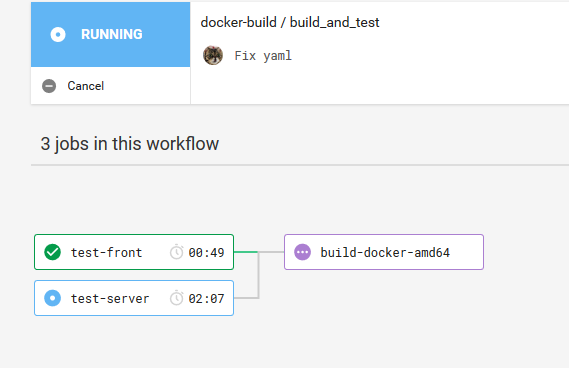
Here it is

There is a good base
https://circleci.com/workflow-run/5fa568dc-4cc8-45c2-b61d-245d3e1ad8aa

@pierre-gilles

If you need help setting up tutorials, HTML, CSS, I can assist.

For pure development, I can’t, but the little I can do if it helps the devs :winking_face_with_tongue:

Just one question. Will gladys 4 be able to ask us questions? For example, upon arrival at the accommodation, ask if we want music, etc?

Nice!

By the way, regarding Docker, there’s still something I haven’t really looked at, which is how to make it possible to perform network scans (Philips Hue, Sonos, etc…) from inside the container. Have you ever done that?

[Edit]:

Apparently with network_mode: host it should do the trick!

I would need help with the documentation indeed :slight_smile: I’ll talk about it here when the time comes!

Good idea! I created an issue →

https://github.com/GladysAssistant/gladys-4-playground/issues/128

The host should work for most protocols.

For my part, I create a dedicated macvlan interface for gladys. I could test for the Hue Bridge (in host)

Hello everyone!

A small question I’ve been wondering about and wanted to get your opinion on before implementing anything is the use of « telemetry » in Gladys 4.

In all software, open-source or not, there are often measures taken to keep anonymous usage statistics of the software.

When I say statistics, it’s just to know, for example, the number of software installations. Nothing too harmful.

I know, it’s a very sensitive topic and some of you might be thinking « what, does he want to track us?? » :smiley:

Absolutely not. The privacy of Gladys users is my number one priority, and you can see it in all my development choices (we are literally the only ones in the market to have an end-to-end encrypted web gateway, at least to my knowledge).

The current problem, in Gladys 3, we have no information on how many people have installed Gladys at home. I know the number of Gladys downloads, but it’s a somewhat useless stat because we don’t really know who is actually using it.

All open-source projects keep anonymous stats to better understand software usage:

  • Which version of the software is running? (very useful to see the fragmentation of versions)
  • Which countries/regions use the software the most? (this helps to better understand the different languages using the software, and also to know where the community is)

I think not having this information is a shame because we are advancing blindly.

Moreover, I don’t see how keeping the versions of the installed software + countries/regions is a privacy violation as long as we only keep the final stats and no personal information is collected.

What I see

Every 24 hours, Gladys makes a request to check if a new version is available. This is not new; it was the case in v3.

The « best practice » in general for keeping stats is to keep a log of API calls to this route and to keep:

  • An anonymous ID
  • The version of the calling instance
  • Thanks to GeoIP, get the country/region (or city, but I wonder if that’s not too much?) of the calling IP.
  • Keep a completely « approximate » latitude/longitude, which would allow, for example, to make a map of active Gladys installations. When I say « approximate, » first of all, it should be known that GeoIP is not a very precise technique, and in addition, we can remove a few digits of precision so that in essence we only keep info within 50-100 km.

This would help better measure the usage of Gladys 4. No personal information is collected.

Let me know what you think :slight_smile:

I hope I’m not shocking you with this, believe me, in the industry most open-source projects don’t take as much care as I do on this subject. I want to do this by the book :slight_smile:

Hi,

You should know that I choked on my sip of coffee when I read « telemetry », but with a bit of perspective I thought why not… And then if it bothers some people, it is always possible to block the call via a firewall, for the seasoned users.

I’m all for using telemetry to get real statistics and know version fragmentation, for example. Even from a security perspective, it’s important for you to know that.

But there’s no need to know the city, only the country matters I think. The country is interesting for developing a new translation and getting to know the community a bit better. Whereas the city is data that doesn’t add much more, and is starting to be a bit more precise already (even if geoip isn’t great either).

If you really want to know the region, the idea of truncating the coordinates can split the difference :blush:

Hello, I’m not against the use of telemetry, the real challenge, I think, in order to collect as much data as possible, is to succeed in explaining in two or three not too long sentences what data is collected and what it will be used for. Not too long, because the lazy ones will click on « Deny » as soon as they see the word Telemetry ^^`

After that, I agree, we need to keep it broad, the city might be a bit too precise.

I am part of the « lazy ones »