Hello,
Do you have Zigbee plugs powerful enough for a water heater / cooktop and compatible with this type of wiring:
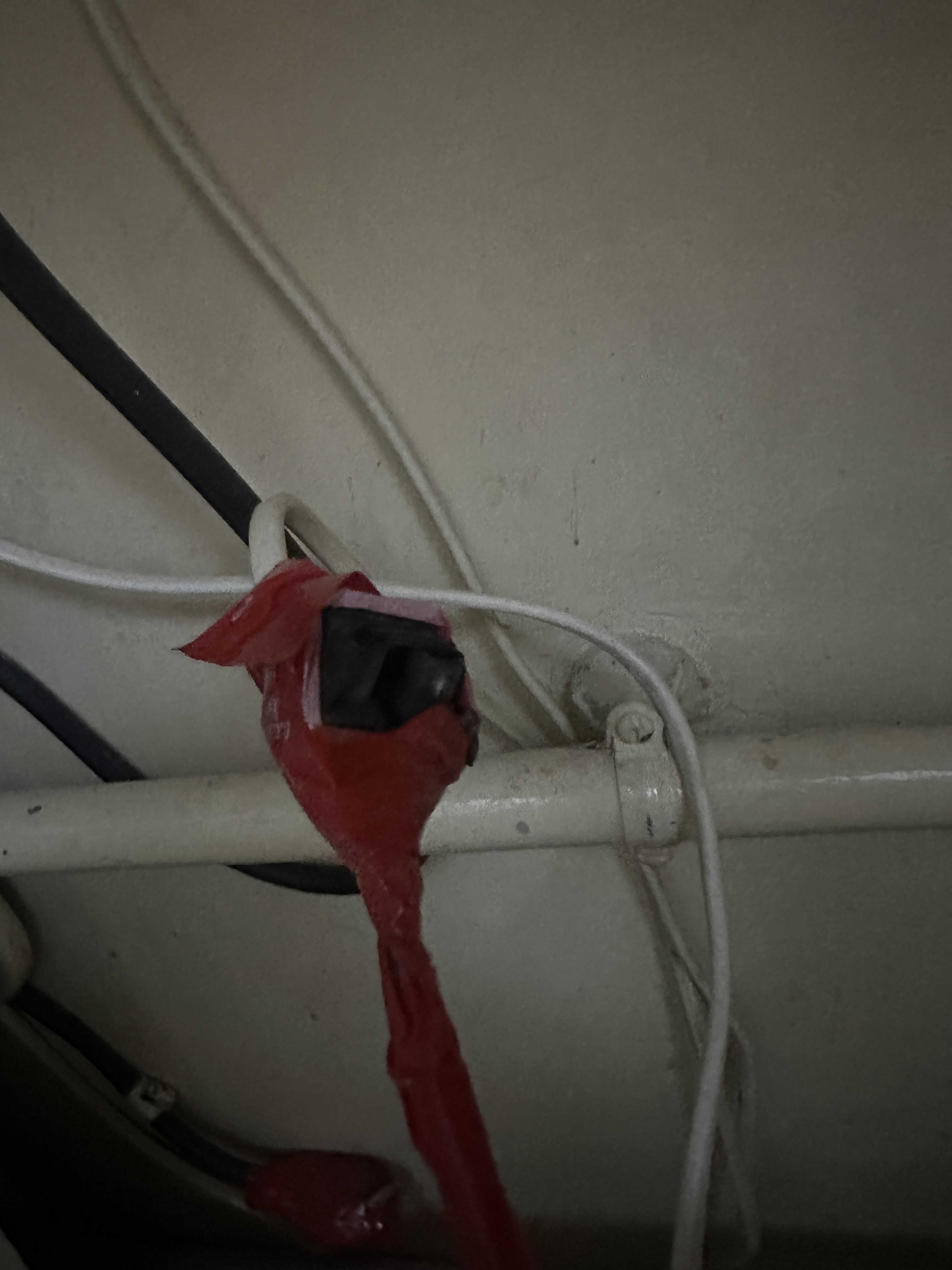
I don’t want to buy just anything and start a fire 
Thanks
Hi @prohand
The water heater has a 20A circuit breaker and the cooktop is 32A.
You should check the power of your water heater — normally 3000W is already quite a bit and a 16A module (max 3680W) could be suitable. But if there is overheating the module will burn before the circuit breaker trips (not great).
I haven’t yet seen a module/socket that exceeds 16A for now 
I recommend adding dry-contact controlled relays at the electrical panel if you have the space; besides, you should already have one for the water heater day/night.
I found this NOUS-D2Z relay for the water heater (20A). There is a 25A model (NOUS-D3Z) but no 32A for the cooktop.
And the main question I should have asked at the start: what do you actually want to do? (control, energy monitoring …)
EDIT: I couldn’t even find a contactor (day/night type) above 25A.
Hi @mutmut,
Thanks for your feedback 
Regarding the water heater, it’s this one with 2250W so I plan to eventually get a 3000W minimum module to be safe:
Regarding the controlled relays, I don’t have any in my electrical panel, it’s just a 16A circuit breaker.
Also, since it’s already connected the manufacturer’s documentation does not recommend a day/night contactor for their connected water heaters, however the app does not report the consumption 
For the NOUS-D2Z I couldn’t find the max W number but we should be fine with the 20A.
Indeed it’s not great if it overheats and the module burns out first, but if we respect the amperage and the max W we should be OK?
Regarding the cooktop it’s indeed 32A and it seems harder to find something that would fit.
Regarding the main question In view of what’s coming out on Gladys regarding energy monitoring, it was more to track the consumption
Pmax = U x Imax = 230V x 20A = 3680W
I’d say then that the NOUS-D1Z is sufficient (16A) but a module that can handle more can of course handle less for the same price.
P = U x I => I = P/U = 2250W / 230V = 10A max continuous current.
So I recommend you go for monitoring-only modules and not control modules, knowing that your water heater is already being controlled.
Current clamps are ideal for not « touching » the devices/modules/circuit breakers carrying power. You need to place the « crab » module (‹ crabe ›) around the phase conductor (usually at the electric meter) and in the direction of current flow (there is usually an arrow indicating the current going toward the end device on the current clamp). So this system is very simple and « without risk of overheating » in use; you just need a bit of space in the electrical panel to get the phase wire(s).
The link you gave doesn’t include the central module, only the clamps, so it’s not useful as is.
Of course, and this is the most important (a small reminder that doesn’t hurt), you must turn off the power before doing anything, to avoid electric shocks or worse.
Thanks for the calculations
Indeed there will be less risk with the clamps but it’s more expensive.
I’ll need two then, one for the water heater and the other for the cooktop.
I’ll have to check if I have room in my electrical panel, which is
I found this module that looks pretty good
Hi,
I was wondering how to monitor the most energy-hungry devices…
while searching I found this: TONGOU Interrupteur Connecté, 32A DIY Commutateur ZigBee Intelligent Compatible avec Alexa, Google Assistant, TUYA/Smart Life APP Contrôle à Distance, avec Mesure, Commande Vocale et Fonction de Temps : Amazon.fr: Bricolage
I’ll go with this module after all:
I’ll let you know as soon as I’ve been able to set it up
Hello, I’ve been using 2 Tuya PJ-1203A control via MQTT | Zigbee2MQTT for 1 year to monitor the water heater, Twizy charging and heat pumps 1 and 2, taking advantage of the fact that they have 2 current loops