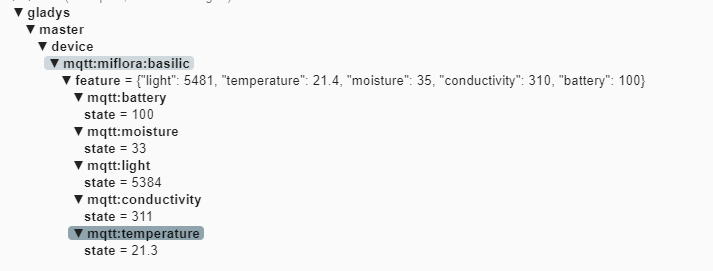
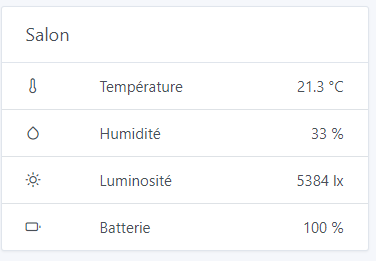
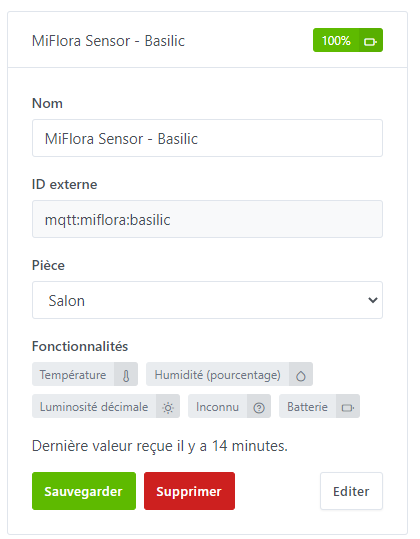
I just received my RPI zero, so I couldn’t help but test the script It works. So the problem indeed comes from RPI3/4, but I’m not knowledgeable enough to debug the libraries in depth.
I will therefore use the pi zero as a gateway and write the data to the MQTT server by adding the option of the parameter reporting_method = "Gladys": a preference for the normalization of data publication?
I started looking at the gladys-bluetooth-analyzer tool for the parrot flower and the miflora which successfully retrieves measurements, @AlexTrovato I have 2 questions:
If I want to integrate these 2 devices into gladys, do I need to create 1 file per device as is done for zigbee or should the code be distributed differently?
Is it necessary to rewrite the data retrieval code entirely or can we use the existing npm libraries for these products?
 It works. So the problem indeed comes from RPI3/4, but I’m not knowledgeable enough to debug the libraries in depth.