Hello everyone!
Having just finished developing injected variables in scenes, I’m starting on this highly requested feature 
I’ve written functional specifications and designed a few screens, and I wanted to see what you think about them.
Functional Specification
As the first user of a Gladys instance, I am by default an « administrator ».
This user has the ability to create other users, other « administrators » or other « users »
- Administrator: The default role of the first Gladys user, they have all rights.
- User: A user has a restricted role with fewer rights. Hidden and blocked for them: All integrations in the « Devices » and « Weather » categories. They can configure the « Telegram » and « Caldav » integrations. The « Settings » tab is hidden for them.
Create a New User
The administrator goes to « Settings » => « Users »
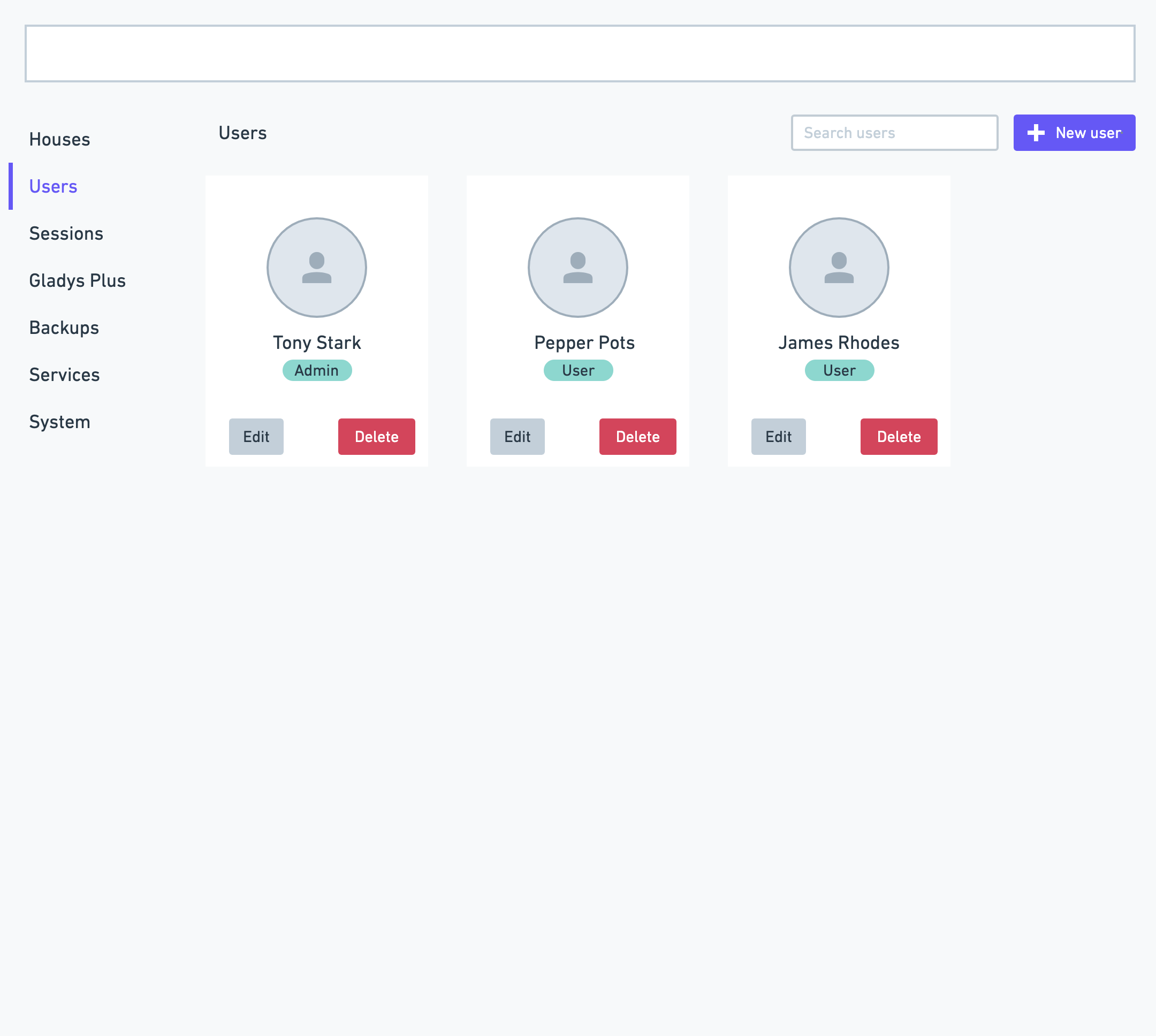
They can create a user and set a password. It is considered that being in a circle of trust (the family) + for simplicity of configuration, the fact that the administrator sets the user’s first password is not a problem (the user can change this password later)
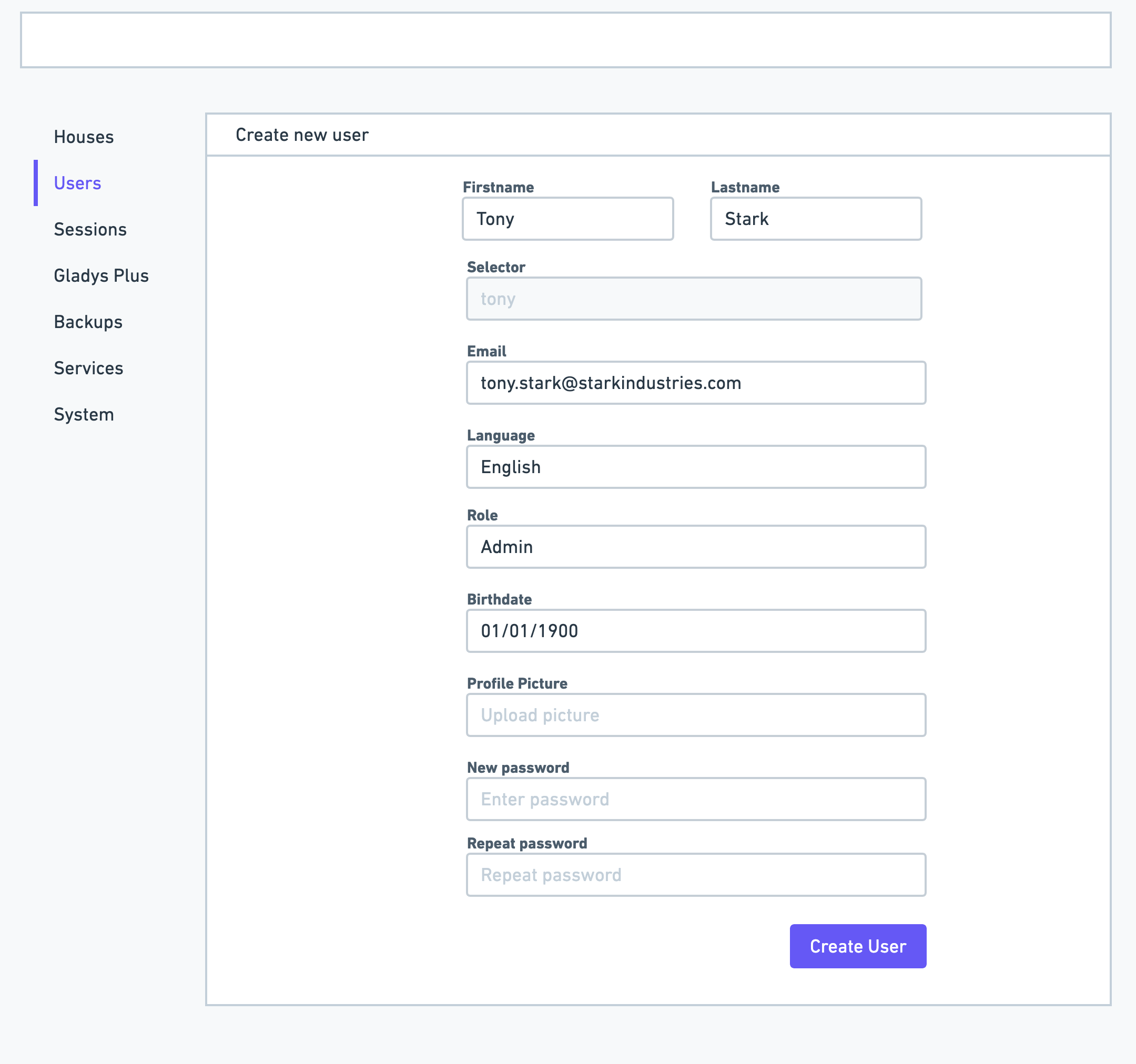
Edit a user
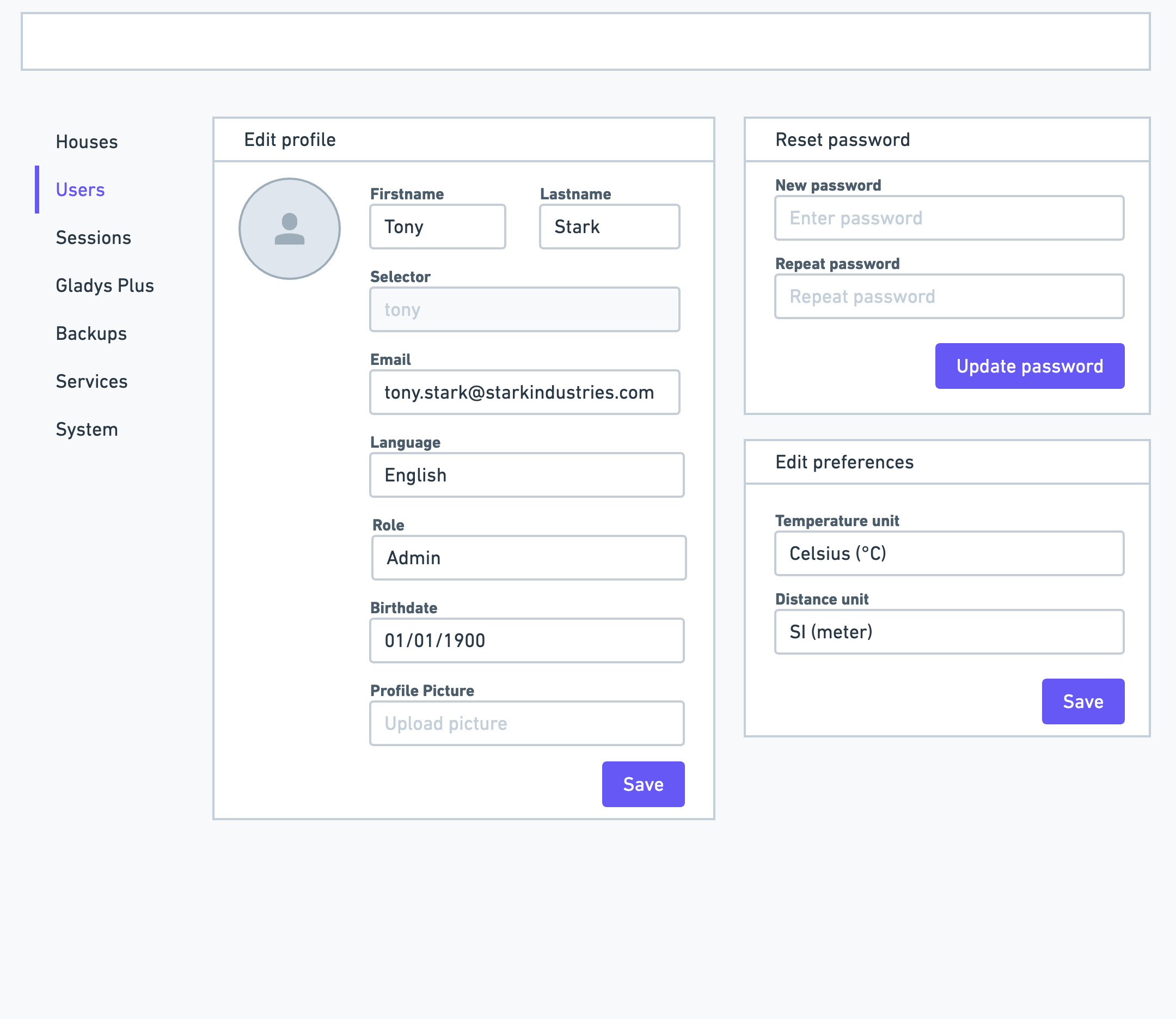
Edit an Existing User
Each administrator can edit users, including other administrators. They can edit both their profile and their preferences.
Delete a User
Each administrator can delete a user. An administrator cannot delete themselves.
Visibility of Different Data
The Dashboards
2 types of dashboards:
- Private (accessible only by the user who created it)
- Shared (accessible by all members of the Gladys instance)
Each user has a private dashboard by default. To be seen about the usefulness of shared dashboards, perhaps it’s unnecessary for the time being…
The Scenes
To be discussed: Scenes are shared by the whole family. Everyone can create scenes and see other people’s scenes.
Another possibility: Scenes are entirely private. Each person only sees their own scenes.
Chat
The conversation with Gladys is between the user and Gladys. It is entirely private.