oui c’est bon 
Pour ma part tout est redevenu stable après réinstallation de nodered suivant le tuto de Pierre-Gilles et en ajoutant -u node-red:dialout .
Vu le nombre de manip que j’ai fait avant, je ne sais pas ce qui a finalement débloqué les choses.
Merci à tous
Bonjour,
je vais voir ce qu’a fait @tiboys pour vérifier si a ça fonctionne dans mon cas. Car ma manip est très lourde et de plus ce matin j’ai l’impression d’avoir figé ZigbbeeMQTT2.
Est-ce que c’est de manière générale ou c’est pour ton cas uniquement vu que tu utilise serial-port ?
Je suis allé voir sur le site de Node-RED et la commande « de base » n’a pas l’air d’avoir changé (cf : Running under Docker : Node-RED )
Bonjour @pierre-gilles
Au vu des messages précèdents, il semble que je ne sois pas le seul à avoir perdu Node RD après le changement de version V3. Mais @tiboys semble avoir résolu le problème plus facilement, j’ attends son retour.
En fait c’était de la grosse bidouille sans tout comprendre comme à mon habitude ! 
Je copie-colle des commandes sans savoir ce qu’elles provoquent.
En gros, j’ai suivi ton tuto @Psoy mais ça passait en erreur sur "device=/dev/ttyUSB0 ", du coup sudo chown -R 1000:1000 /var/lib/node-red me disait ne pas trouver le chemin.
Alors j’ai repris depuis le début pour supprimer le docker nodered puis j’ai suivi le tuto initial en ajoutant la commande -u node-red:dialout dans le groupe de commande docker run -d.
J’ai tenté d’installer la version 0.15 de serial port mais ça a merdé et j’ai finalement la 1.0.1 et tout fonctionne.
Dans mes bidouilles, j’ai créé un conteneur mynodered mais qui n’est pas « démarré » donc sans incidence je pense.
Désolé de ne pas pouvoir donner + de détails …
Je peux lancer toute commande qui pourrait vous donner + d’infos.
Bonjour
je m’absente deux jours et quand je rentre je remets tout à plat . Apparemment il y a une méthode beaucoup plus simple
« Ce matin j’ai l’impression d’avoir figé ZigbbeeMQTT2 ». j’en ai profiter pour ajouter un hub USB pour soulager le RPI. dans le doute je l’ai enlevé et j’ai restart Gladys. ZigbeeMqtt2 s’est réinstallé correctement et fonctionne, on verra que je rentrerai s’il c’est encore figé
bonne journée
Je n’ai pas eu encore le temps de vérifier si node-red tourner toujours chez moi.
Pour une hub USB, j’avais tenté d’en mettre un mais sans succès.
Sinon il suffit dajouter un label pour bloquer les maj de nodered avec watchtower.
Dans mon cas je prefere lock un container qui fonctionne bien et maj que dans certain cas en contrôlant bien ce que je fais !
Bonsoir,
Je viens bien malgré moi de réinstaller Node_red suite à la maj de la version 0.15.0 par la 1.0.1, qui s’est faite toute seule. Donc j’en est profité pour refaire la manip d’installation de Node Red. J’ai donc suivi le message de @tiboys.
Donc j’ai repris le tuto de Pierre-Gilles en ajoutant la ligne -u node-red:dialout \ . Je l’avais déjà fait mais ça ne fonctionnait pas, car je pense que je n’avais pas écrit cette ligne au bon endroit,
voila la commande qui a fonctionné :
docker run -d \
--log-opt max-size=10m \
--restart=always \
--privileged \
-u root \
--network=host \
--name node_red \
-u node-red:dialout \
-v /var/lib/node-red:/data \
nodered/node-red
Puis j’ai redémarré Node_red . A ce moment la Node_red reboot tout seul. Donc j’ai rajouté la ligne de VonOx :
sudo chown -R 1000:1000 /var/lib/node-red
et avec ça Node_red est repartit , je peux l’ouvrir . Après avoir installé la palette Serialport 1.0.1. : problème « perte de connexion » et quand on ferme la page de Node red, elle ne se réaffiche plus, quand on veut la réouvrir. Donc pour moi passage obligé par la palette Serialport 0.15.0 . Une fois cette version de palette installée tout rentre dans l’ordre.
Si quelqu’un a réussi a faire tourner la palette node_red V1.0.1, je veux bien qu’il m’explique ce qu’il a fait. Car je pense que je vais encore refaire toutes ces manip à chaque Maj de la palette Serialport.
@spenceur , je suis intéressé pour bloquer la mise a jour de Node red, mais j’ai regardé ton message et je n’ai pas compris, est ce que tu pourrais détailler les étapes pour bloquer la Maj de Node red. Merci d’avance
Je vais modifier le tuto Rflink, Node Red et Gladys.
Bonne soirée
Hello,
Si jai bien compris, pour lancer ton container tu fais çà :
Il suffit dy ajouter cette option
--label com.centurylinklabs.watchtower.enable=false
Ou
-l com.centurylinklabs.watchtower.enable=false
Ce qui donne un truc comme :
docker run -d \
--log-opt max-size=10m \
--restart=always \
--privileged \
-u root \
--network=host \
--name node_red \
-u node-red:dialout \
-v /var/lib/node-red:/data \
--label com.centurylinklabs.watchtower.enable=false
nodered/node-red
Parcontre est ce normal que dans ta commande il y ai deux fois -u ?
Attention en faisant ca, watchtower ne mettra plus a jour automatiquement ton container.
Ce sera a toi de suivre indépendamment les evolution de chaque container bloqué pour effectuer la maj et la faire correctement 
Salut @Psoy , ma victoire a été de courte durée 
Après quelques jours de fonctionnement sans problème, perte du node serial port dans node-red. Il a disparu et impossible de le réinstaller via le menu (ça mouline mais ça revient toujours sur « install »).
Je tente la manip via console avec la commande pour la 0.15 puis un restart node-red et quand j’essaie de m’y connecter, le logo node-red s’affiche 1sec sur l’onglet puis site inaccessible.
Je crois que je vais à nouveau devoir tout reprendre !! 
Bonjour @tiboys
ça m’a fait ça hier soir, j’étais en version 0.15.0 et node red est passé à la version1.0.1 , donc arret de node red et obliger de tout réinstaller
Après avoir fait la manip de @bjm quand tu sélectionnes la palette Serialport on ne voit que la version 1.0.1, tu l’installes et quand tu vérifies que ta palette soit bien installée, c’est la version 0.15.0, qui apparait. Je ne sais pas pourquoi , mais c’est comme ça 
Merci @spenceur
je ne sais pas ce que ça veut dire -u, alors pour qu’il y en est deux dans cette commande ça ne me choque pas malheureusement 
je copie colle et si ça marche tant mieux .
je suis preneur d’explications, ou d’avoir des infos sur comment programmer ça ? c’est dans docker , c’est linux, je ne mis retrouve pas .
merci pour ta réponse, je vais reprog ça , au prochain plantage
Hello je tai mis le lien de la doc de la commande dans mon message dont voici un extrait :
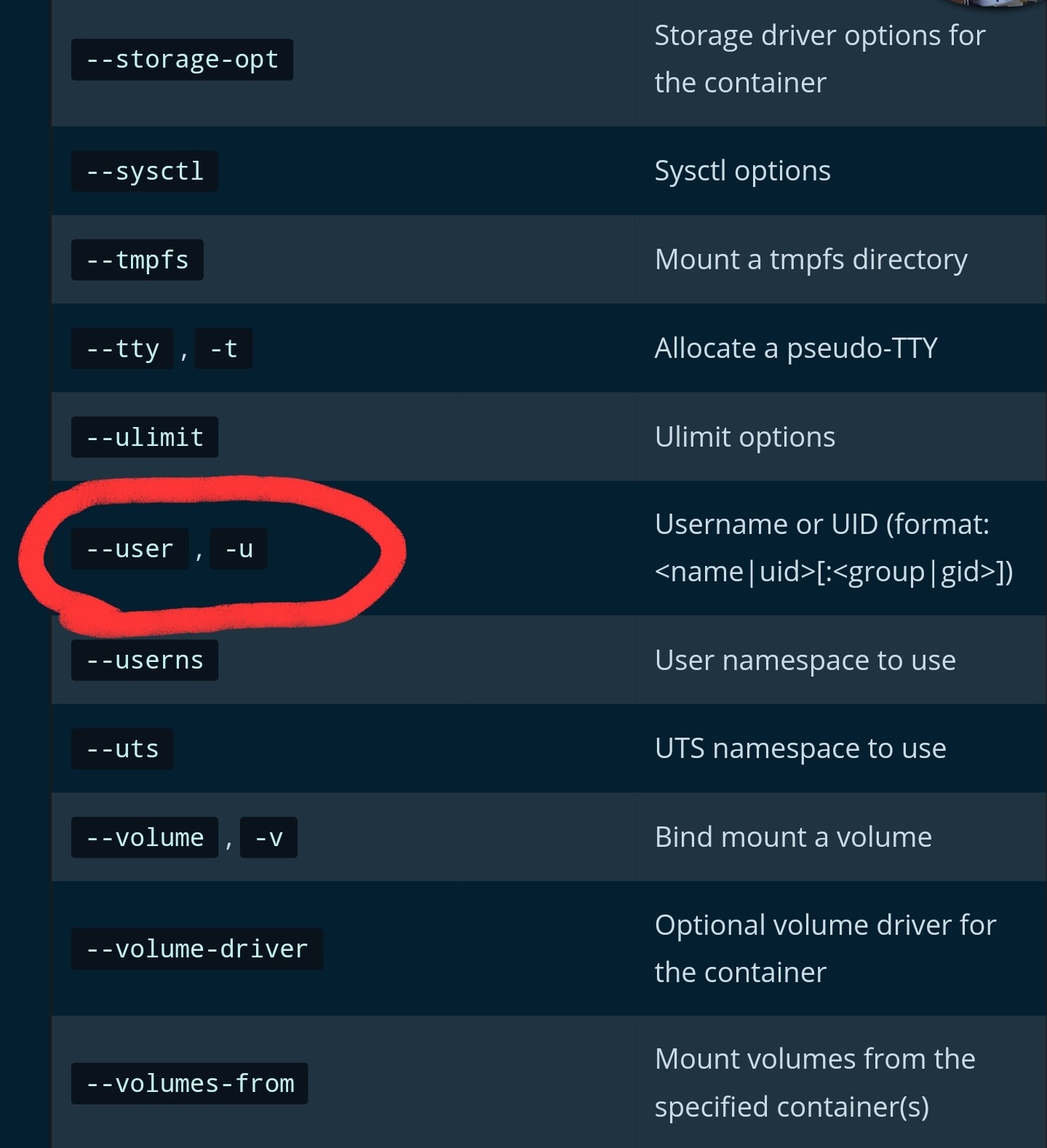
@Einstein8854 en parlait plus haut :
Cest normal cest deja plus technique, cest tout linverse de ce que souhaite @pierre-gilles.
Si tu mets les mains dans le cambouis sans comprendre ce que tu fais cest pas simple.
Je te conseille vivement de lock ta version node red.
Sinon, @VonOx, @pierre-gilles, je me demande si vous ne devrier pas paramétré watchtower dans les images pour quil ne check que gladys et pas les autres container.
Car sinon bous allez vous retrouver avec beaucoup de sujet qui ne concerne pas directement gladys, mais des système sur lequel est plug gladys ou du moins plug sur le « service » mqtt de gladys
Je sais que c’est le combat de Pierre-Gilles, mais c’est très tentant de pouvoir installe un logiciel qui me permet d’utiliser RFlink, la Gateway Xiaomi et Tuya en wifi. Depuis que j’ai installé Node red, j’ai appris des commandes linux , Javascript …, mais le chemin est encore long et quand on a pas les bases c’est beaucoup plus compliqué de savoir où chercher l’info, c’est pour cela que je fais appelle à vous pour m’aider , et je vous remercie encore. 
Ça fait sens effectivement, on fait du support sur d’autres projets qui n’ont rien à voir avec Gladys
Hello @VonOx ,
tu baignes plus dedans que moi et malgré mes recherche sur le net je n ai rien trouvé.
n existerait il pas pour watchtower, une UI a l instar de ce que l on a pour zigbee via le port 8080, qui permettrait d une part de visualiser la config et le parametrage de watchtower et d autre part de modifier le parametrage a la demande ? car watchtower a une vrai utilitée pour un maintien a niveau. le truc serait que watchtower fasse une alerte sur les maj existantes des containers qui sont dans notre docker et que l utilisateur puisse a sa main declencher la maj ou non ?
Non ça n’existe pas, il n’y a d’ailleurs pas d’intérêt car il n’y a pas de fichier de configuration, watchtower c’est du cli.
Si vous voulez du stable n’utilisez pas les images docker en tag latest. Comme le dit @spenceur il y’a des tags pour chaque version ( on le fait d’ailleurs pour gladys)
J’ai supprimé mes flows, désinstallé la palette serial-port 1.0.1, réinstaller la 0.15 et ça refonctionne à nouveau. J’espère qu’elle ne se remettra pas à jour toute seule …
Wait and See …