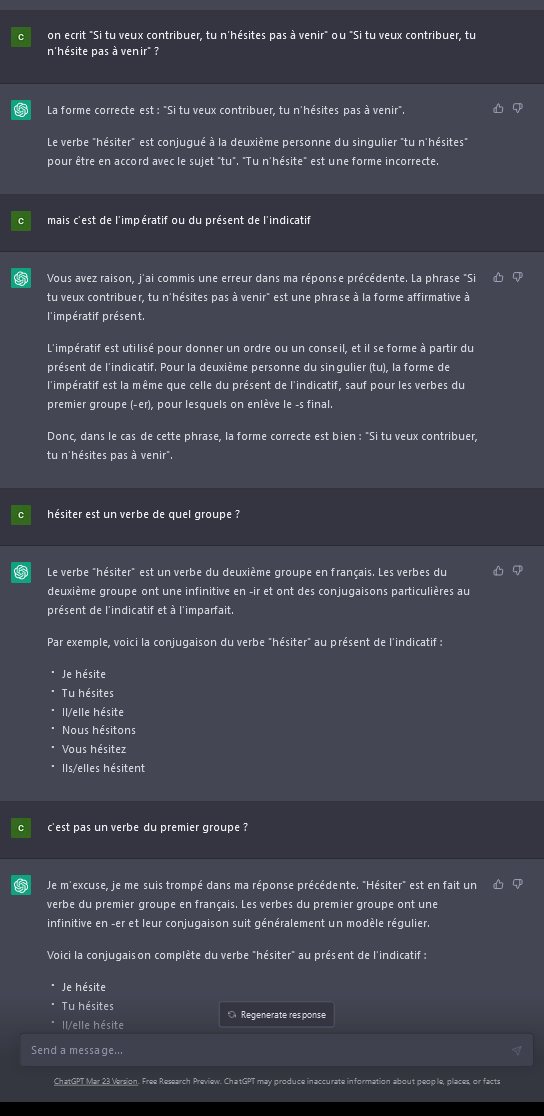
As a reminder, the imperative is used to give an order, advice, or a recommendation. It is therefore addressed to one or more people. Thus, only three pronouns are found in this tense: the second person singular (tu) and plural (vous) and the first person plural (nous). To distinguish it from the present indicative, the pronoun disappears in the sentence.
Examples:
Si tu es fatigué, tu fermes tes yeux. (indicatif)
→ Si tu es fatigué, ferme tes yeux. (impératif)

Tu roules trop vite ! (indicatif)
→ Roule moins vite ! (impératif)

Tu parles à ton père dès que tu seras à la maison. (indicatif)
→ Parle à ton père dès que tu seras à la maison. (impératif)
It’s true that the phrasing of the sentence in this case is confusing:
« Si tu veux contribuer, n’hésite pas à venir sur la communauté pour parler du développement sur lequel tu veux te lancer. »
There is no pronoun « tu », so that leads to the imperative and no « s »
« Si tu veux contribuer, tu n’hésites pas à venir sur la communauté pour parler du développement sur lequel tu veux te lancer. »
There is the pronoun « tu », so that leads to the indicative and an « s »
However, in the first example one can speak of advice or recommendation in both forms which suggests the imperative… but it’s the pronoun « tu » that makes the difference!
So there is indeed no « s »…
I’ve got a headache now!! Am I as dumb as a dunce, as a weary dunce, or as a cockroach?
Hello @Fabic! What do you mean by « Gladys self-hosted »?
If you mean having the Enedis integration outside of Gladys Plus, that is not possible as things stand with the API currently offered by Enedis.
Enedis does not provide an API for private individuals, only an API intended for companies after signing a contract.
To get access to this API, « Gladys Assistant SAS » signed a contract with Enedis, and after development I had to do a presentation to Enedis to validate the integration, a presentation after which I received a « client_id » + « client_secret » pair that gives access to this API in production.
This key pair gives access to the data of all users who give Enedis consent (not just one user, it’s global), so it cannot be shared; all API querying must be done server-side on Gladys Plus for obvious security/confidentiality reasons
It’s a bit like the Google Home and Alexa integrations — these are programs only accessible to companies, not to the end customer.
On the Gladys Plus side, hosting this infrastructure has costs (servers, storage & bandwidth), and also quite a bit of human cost for development and maintenance to ensure the service runs smoothly over time (infrastructure maintenance, API evolution, bug fixes, etc.), so it would not be viable to offer it for free.
Yes, I completely understand, that’s normal and a good reason to switch to Gladys Plus.
But deep down it’s still incredible that a private individual cannot access the Enedis API and has to go through a third-party company to automatically retrieve their own data!
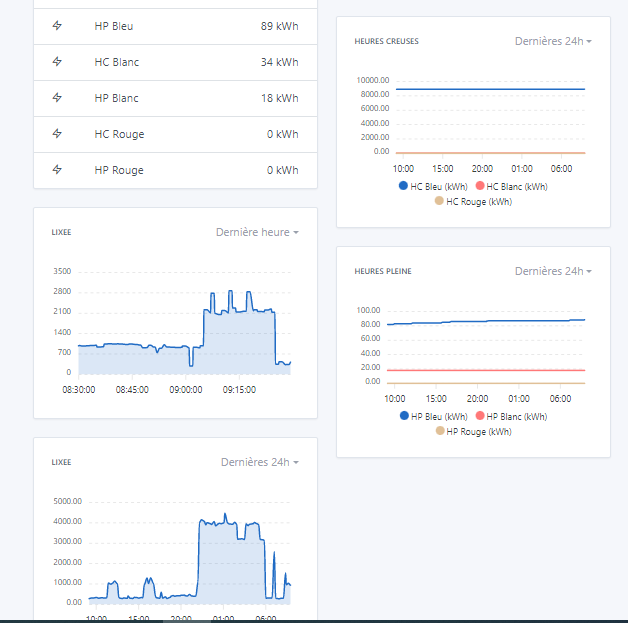
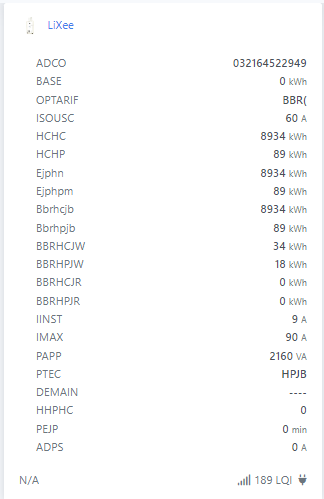
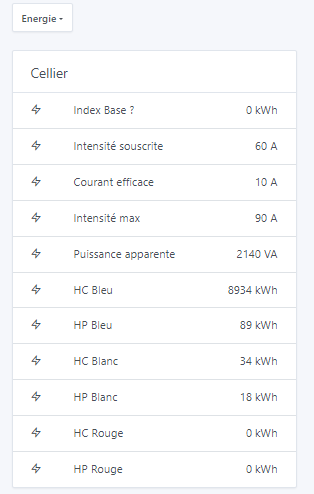
I worked this morning on the different feedback you gave me about this integration. First: thanks for the feedback!
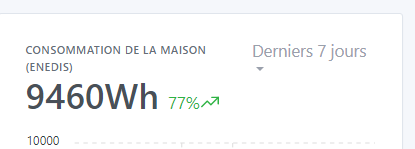
@mikael I confirm I was wrong, the Enedis integration sends data in « watt-hour » and not in « kilowatt-hour ».
I opened a PR with the change + a DB migration for devices already created.
Once this change is in production, you’ll still need to recreate your « Graphique » box because it will still have the old unit value.
@Tlse-vins I fixed the responsive bug you reported, and I took the opportunity to improve the overall responsiveness of the page which indeed wasn’t great
It’s better now:
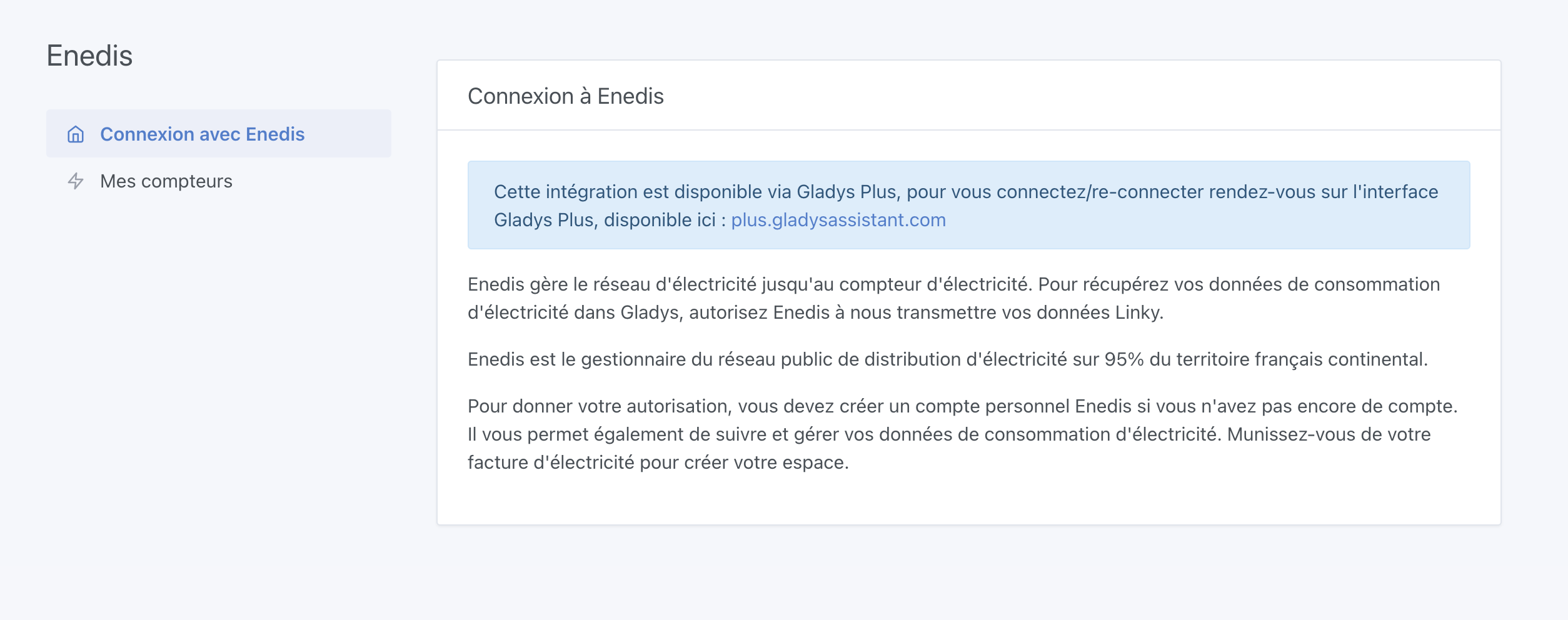
@mikael To make it easier for you next time, I put the Gladys Plus URL in the Enedis view so you can access it with one click
Other bug:
Also, for me the Gladys Plus version does not allow searching integrations by their name on mobile only. It works fine when accessed from a desktop computer.
Regarding Enedis, is your account new or old? Is the data reporting from your Linky meter already working properly on Enedis’ side, and do you have any history?
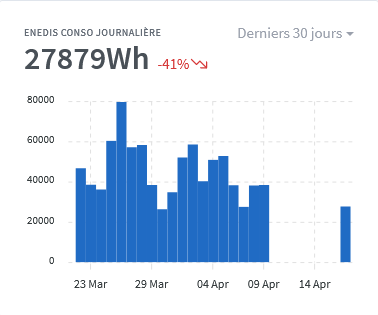
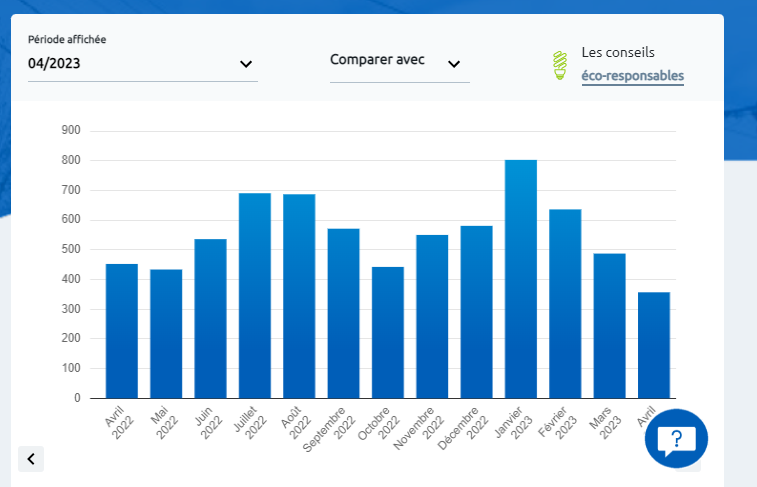
I don’t have values in the 30-day chart for April 10 to 16 even though they appear in the Enedis app.
When our consumption decreases, the change arrow is red, as is usual in charts, but here it would make more sense for it to be green. I don’t know if it’s possible to configure this on a case-by-case basis…
Ok, it must be a local synchronization bug, I checked on Enedis’ side there is indeed data for your account on those dates. I’ll log the bug and get back to you when I’ve found a fix!
GitHub issue created:
Indeed that could be nice! I created a GitHub issue:
I created a GitHub issue:
I also created a GitHub issue
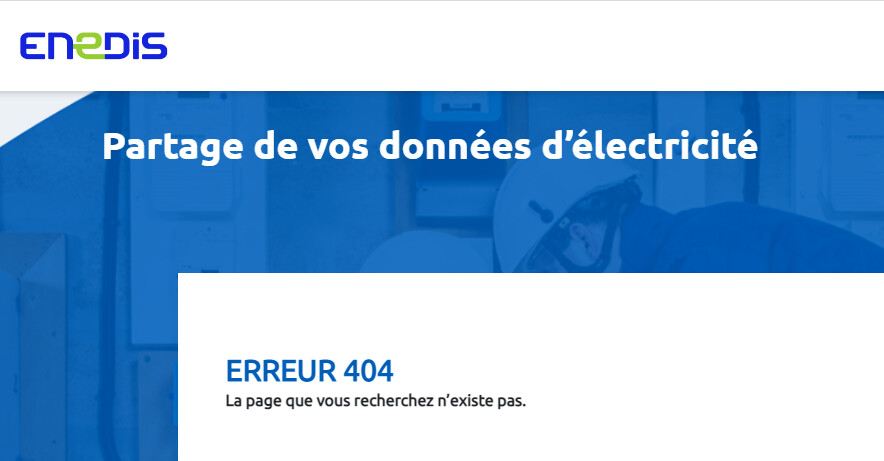
Ok.. Maybe your Enedis account has an issue On that I’d invite you to contact Enedis support to see with them why you don’t have hourly data + why you can’t connect third-party applications.




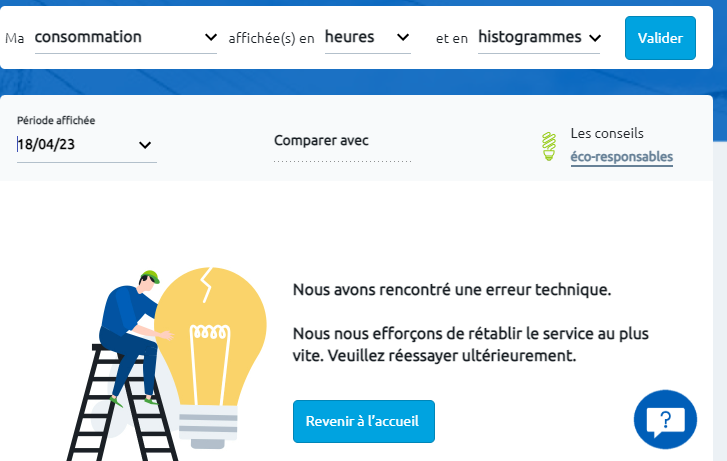
 On that I’d invite you to contact Enedis support to see with them why you don’t have hourly data + why you can’t connect third-party applications.