Z2MQTT radiator valve - missing parameters

Good evening everyone,

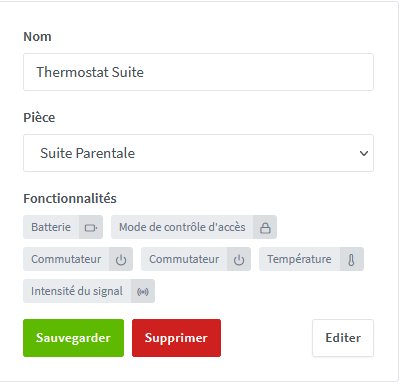
I just installed a Moes BRT-100-TRV valve. But when I add it I only get the temperature sensor and 2 « switches » that I don’t know anything about. See the screenshot.


Given that the device is apparently supposed to expose many more things (Moes BRT-100-TRV control via MQTT | Zigbee2MQTT).
I don’t have any specific logs reported by Gladys.

I don’t know if there’s anything I can do to make this work or if it’s just the assistant that doesn’t yet support the features I’m missing.
I hope I’ve been thorough enough; otherwise I’ll be happy to provide as much info as possible :slight_smile:

Have a good evening.

Hi @Cookcool! For now Gladys doesn’t manage heating, but it’s a requested feature :slight_smile:

You can vote for this request if you’re interested:

If it helps, I have been using the BRT-100-TRV since the beginning of last winter on cast-iron radiators with a central boiler (in a residence).

Gladys doesn’t support them yet; you can see buttons but they do nothing.

However, these models can be programmed directly in the head. For that, you must use the Zigbee2MQTT interface (which uses Gladys’s port 8080), find the thermostatic head and change the following parameter:
The programming is divided into 3 parts:

  1. Monday to Friday
  2. Saturday
  3. Sunday

Which gives in my screenshot (broken down according to the 3 parts described above):

05:00/19°C  07:30/17°C  16:30/19°C  20:00/17°C
1 Like

I just cast my vote :slight_smile:

Thanks for the info :slight_smile:, I’ll try that this weekend. And otherwise, are you happy with these thermostatic valves?

The heads themselves are fine, not too big, fairly stylish and functional.

But the mounting part is too fragile — they come off too easily and I broke one of the clips by getting too close too quickly.

Fortunately Domadoo will be able to send me a replacement.

Otherwise the programming works well and it’s rather quiet.

In these times of energy crisis, intelligent heating management would be a ‹ selling point › for the project.

It’s under consideration
