Tu peux avoir des interférences entre ton réseau zigbee et ton réseau wifi.
Oui, comme je disais à @jean_bruder, pour moi le zigbee c’est une vrai galere dans la partie maison, j’ai 4 antennes wifi intérieur + 3 à l’extérieur et le zigbee se déco tout le temps meme avec des prises situées à 2/3m. Certains appareils n’ont pourtant aucun soucis…
Un peu vexé quand je vois que ca marche nickel chez la majorité ^^ mais je m’y suis fait !! Je fais un mix du coup avec ce qui marche !! 
Par contre comme je lui disais celui j’ai fais un pod gladys avec zigbee côté bâtiment connecté au zigbee de la maison, ca marche nickel ^^ 
Bonsoir @Hizo Je veux bien faire un tuto, mais ça irait à l’encontre du bon usage proposé par @pierre-gilles. AMHA, il conviendrait plutôt de faire évoluer Gladys en ce sens afin de ne pas commencer à bricoler et à partir dans tous les sens : les développeurs de ce projet démontrent chaques jours leur implication et leur volonté de faire progresser Gladys de manière à le rendre adapté au plus grand nombre 
Je trouve que c’est toujours bien d’avoir une porte de secours, pour le moment Gladys ne le permet pas, autant avoir des explications si on se retrouve dans ce cas.
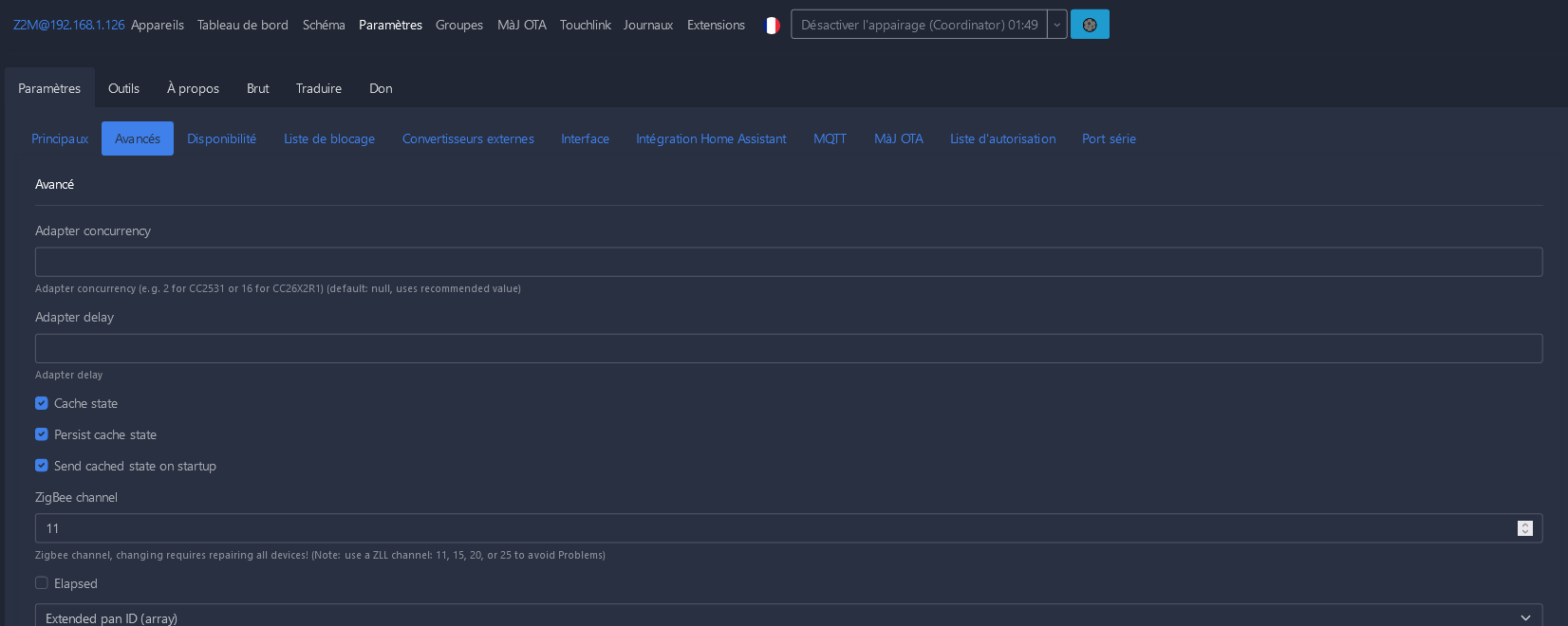
Zigbee est sur le canal 11 par défaut Zigbee network | Zigbee2MQTT
Selon la box internet voir si il est possible d’éviter ce canal (sur les freebox c’est en automatique par défaut) ou le modifier dans le paramétrage du fichier configuration.yaml
Il y a également
Avant d’aller dans le détail, il est bon de rappeler que dans votre installation domotique, il est fortement recommandé d’éloigner suffisamment votre clé Zigbee de votre box/routeur Wifi, mais aussi de votre box domotique suivant la qualité de l’électronique de celle-ci. Sur les Pi4, les ports USB 3 ne sont pas bien isolé (non blindé) et perturbe directement votre coordinateur Zigbee. Cela peut être évité en rajoutant une rallonge USB ou un hub USB alimenté. Donc si vous avez des émetteurs/récepteurs Zigbee, Wifi ou Bluetooth, il faut tant que possible les éloigner les un des autres.
Côté signal radio, l’idéal est d’éviter le chevauchement du canal Wifi avec celui du canal Zigbee.
Il faut donc tenir compte de la largeur de bande utilisé par le canal de son Wifi pour ne pas chevaucher celui de son Zigbee. Sauf que dans la pratique c’est pas forcément si simple car il peut il y avoir des contraintes.Pour le Wifi, les appareils sont capable d’utiliser tous les canaux, mais pour le Zigbee, certains fabricants ont bloqué leurs produits sur un seul canal du Zigbee (Legrand sur canal 11 uniquement, Livolo sur canal 26 uniquement), donc il faut faire attention au matériel Zigbee que l’on utilise.
Pour le Zigbee, la portée est moins importante que le Wifi, donc pas de risque d’avoir un voisin avec son Zigbee qui vient perturber le sien…mais avec le wifi du voisin, c’est moins sûre. Cela dépend de la distance entre habitation.
C’est vrai qu’il est pratique d’avoir l’installation et le démarrage des containers (zigbee2mqtt, mqtt, node-red) en automatique pour les newbies autant il serait bien d’avoir la possibilité de lier gladys à un existant juste en entrant les paramètres (ip, port, identifiants) de ces containers !
Oui preneur de toute PR sur le sujet pour ajouter la possibilité de se connecter à un broker externe
Il y avait eu une première proposition de PR par @AlexTrovato qui n’avait pas abouti par manque de temps. La PR est sur GitHub, si quelqu’un veut reprendre le développement je mergerais avec plaisir !
Ca y est j’ai enfin pris le temps de changer de canal (passage au canal 26 / ne croise aucun canal wifi) et d’appairer de nouveau mes appareils (très simple par ailleurs, même pas eu besoin de renommer) et …
Je suis ravi et je valide ++ la simplicité d’intégration/utilisation (15 appareils). Tout fonctionne nickel et meme certains appareil que je n’arrivait pas à appairer sur le canal 11 sont dorenavant intégrés. Le maillage est redoutable pour ameliorer les portées, je peux meme atteindre mon bâtiment situé à 20m (appareil à 25m), je pense installer une prise à l’entrée de ce dernier pour ameliorer la qualité, mais je vais pouvoir me passer de ma 2eme clé zigbee !!

@Terdious ce qui serait super c’est de pouvoir modifier cette valeur depuis Gladys dans l’intégration zigbee2mqtt par la suite si tant est que cela soit possible, tu l’as bien fait depuis l’interface zigbee2mqtt je suppose ?
hello, ce serait sympa si vous pouviez faire un petit tuto pour expliquer comment et avec quoi effectuer ce changement de canal?
Effectivement, pouvoir éviter les interfaces multiples et tout piloter depuis Gladys serait vraiment chouette 
Vous connaissez déjà la réponse de @pierre-gilles : Demande de fonctionnalités 
Il faut passer par l’interface zigbee « IP gladys:8123 »
@jean_bruder
En cherchant dans la doc Z2m il suffit apparemment dans les paramètres du fichier configuration yaml de préciser l’IP de l’équipement distant
Fait un retour si cela apporte un résultat 
Bonsoir
Ayant à nouveau un peu de temps pour bricoler ma domotique, je me suis amusé à connecter deux lieux (grange et jardin d’hivers de Madame) au moyen de deux LidlBox supplémentaires (en promotion à 9,90€ actuellement) à mon actuel réseau zigbee. Les LidlBox sont connectées au réseau IP au moyen d’adapteurs CPL. Pour lier tout ça, un conteneur Zigbee2MQTT pour chaque LidlBox et un conteneur MQTT unique vers lequel remontent les infos. C’est super pratique du coup, puisque j’ai une bonne distance entre les bâtiments, mais au final tout apparaît de manière unifiée sous Gladys
Belle soirée,
Jean
hello @jean_bruder ,
ton installation m interesse, j ai un poulailler que je voudrais piloter avec gladys a 50m de mon serveur gladys.
j ai 2 prise cpl (assez ancienne), une lidlbox , maitrise assez bien nodered et voudrait faire une installe avec des eqpts zigbee…
si tu pouvais faire une description de tes parametrages et un schema, je n ai pas reussi a faire reconnaitre ma lidlbox par gladys (ai un dongle sonoff sur mon serveur)
Bonjour @Einstein8854 ,
La LidlBox n’est pas prise en charge par Gladys, tel que c’est indiqué dans plein de documents : Gladys s’appuie nativement sur un dongle USB. J’avais cherché à bricoler dans ce sens pour utiliser la LidlBox en modifiant directement les fichiers de configuration de Z2M sous Gladys, mais … c’est pas bien 
Une fonction bien pratique à été introduite du coup (Merci à @pierre-gilles et aux développeurs), c’est de pouvoir utiliser un module MQTT externe, tel que je le fais donc :
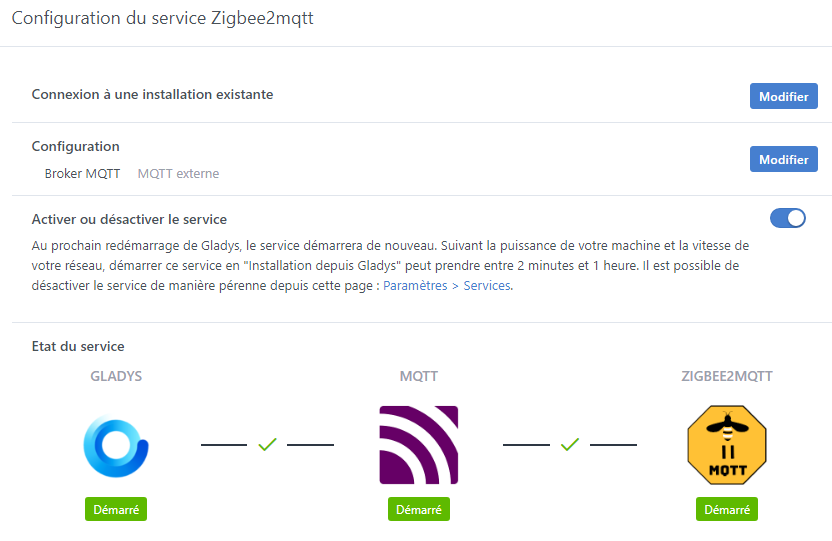
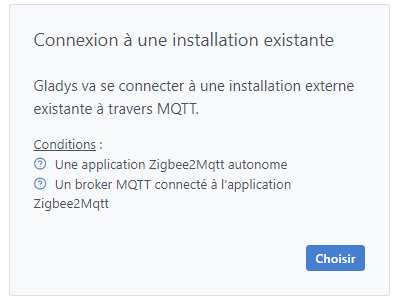
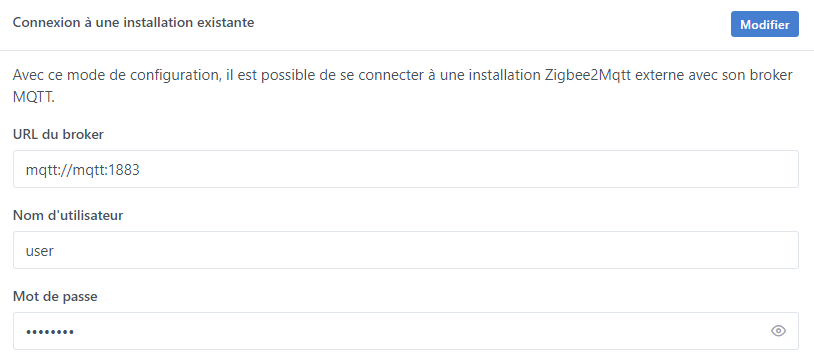
Voilà pour Gladys.
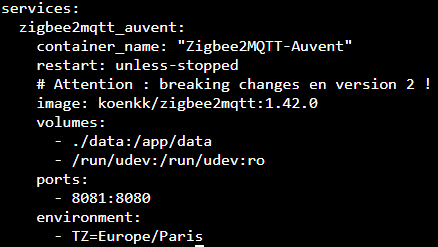
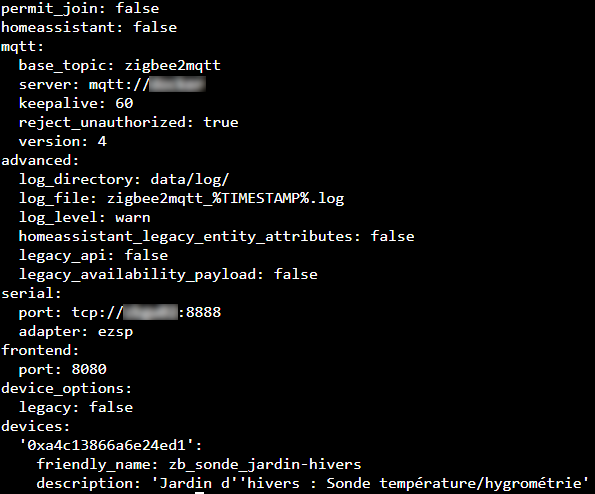
A coté de ça, j’ai un conteneur MQTT déclaré sous Gladys (mqtt://mqtt:1833), et autant de conteneurs Z2M que de LidlBox déployées et connectées à mon réseau local. La configuration est adaptée à chacune au niveau de l’adresse de la LidlBox sur le réseau. Ne pas oublier de changer le port de l’UI Web, par défaut 8080.
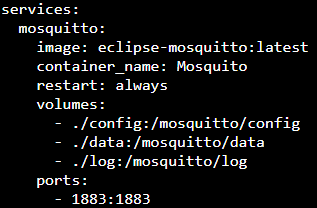
Configuration des conteneurs MQTT et Z2M :
Pour Mosquito (MQTT) :
Pour Z2M :
Et la configuration spécifique à ce conteneur Z2M (dans le dossier data) :
Concernant la LidlBox, elle est modifiée suivant le tuto donné plus haut, qu’il faut juste adapter à la dernière version du firmware :
- récupérer le mot de passe « root » via un terminal connecté directement à la LidlBox,
- modifier les scripts d’initialisation toujours connecté directement : les binaires et les scripts ont changé, il faut donc adapter un peu …
- flasher le fimware EZP à distance cette fois via SSH.
Voilà dans les grandes lignes, c’est pas trop compliqué. J’espère que ça pourra aider. Sinon, n’hésitez pas à me le faire savoir
Merci beaucoup pour ce partage @jean_bruder, c’est très intéressant et ça va aider du monde je pense
J’ai partagé sur Twitter !