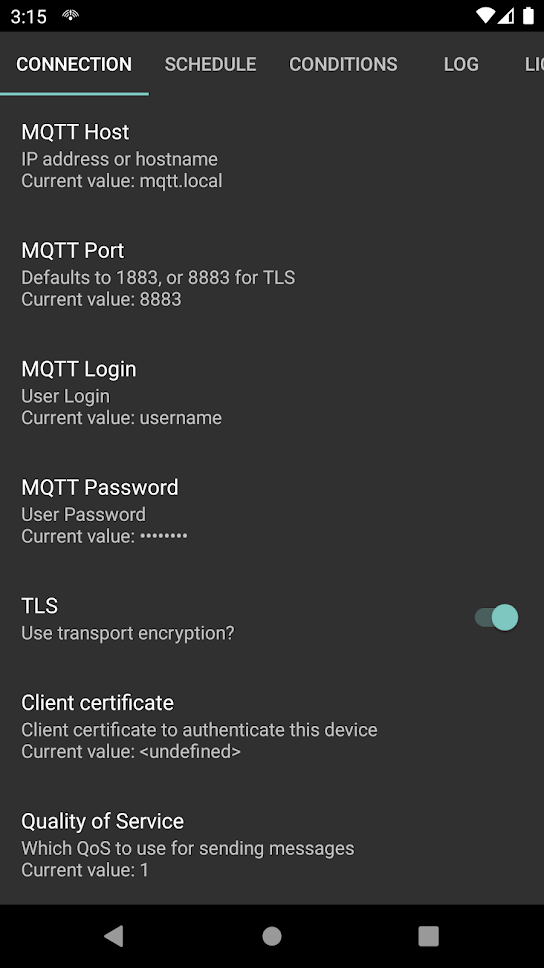
The application allows you to register on an MQTT server to push events when the home WiFi is detected.
This allows me to detect my phone on the WiFi and easily and correctly identify myself.
I don’t currently see how I can do this.
Maybe the possibility of creating MQTT users in the service needs to be added?
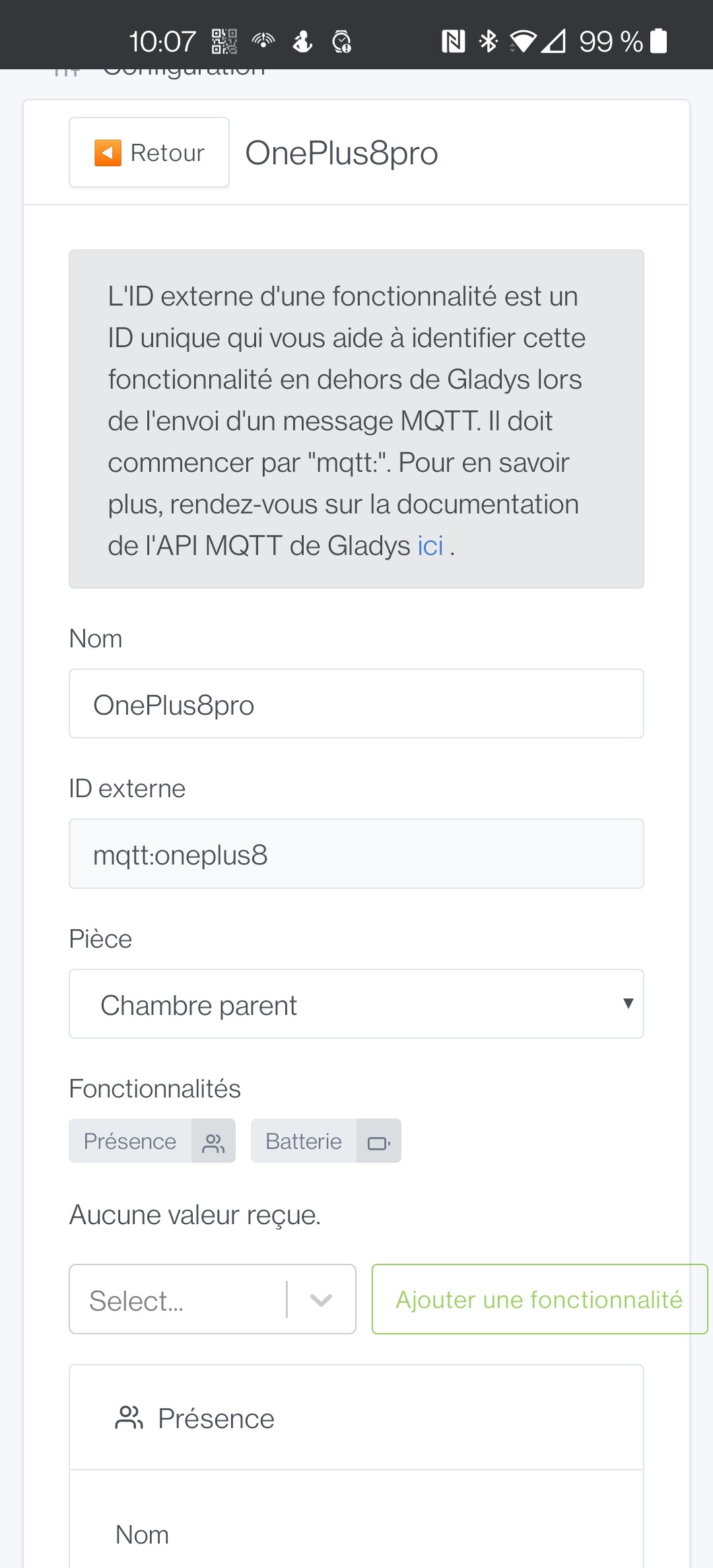
Normally I think you can use the same identifier provided in Gladys to identify yourself on the MQTT server, you just need to use a client-id different from Gladys’s (which is random so it shouldn’t be a problem)
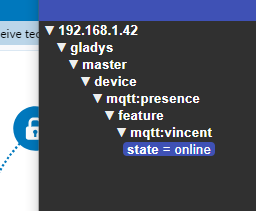
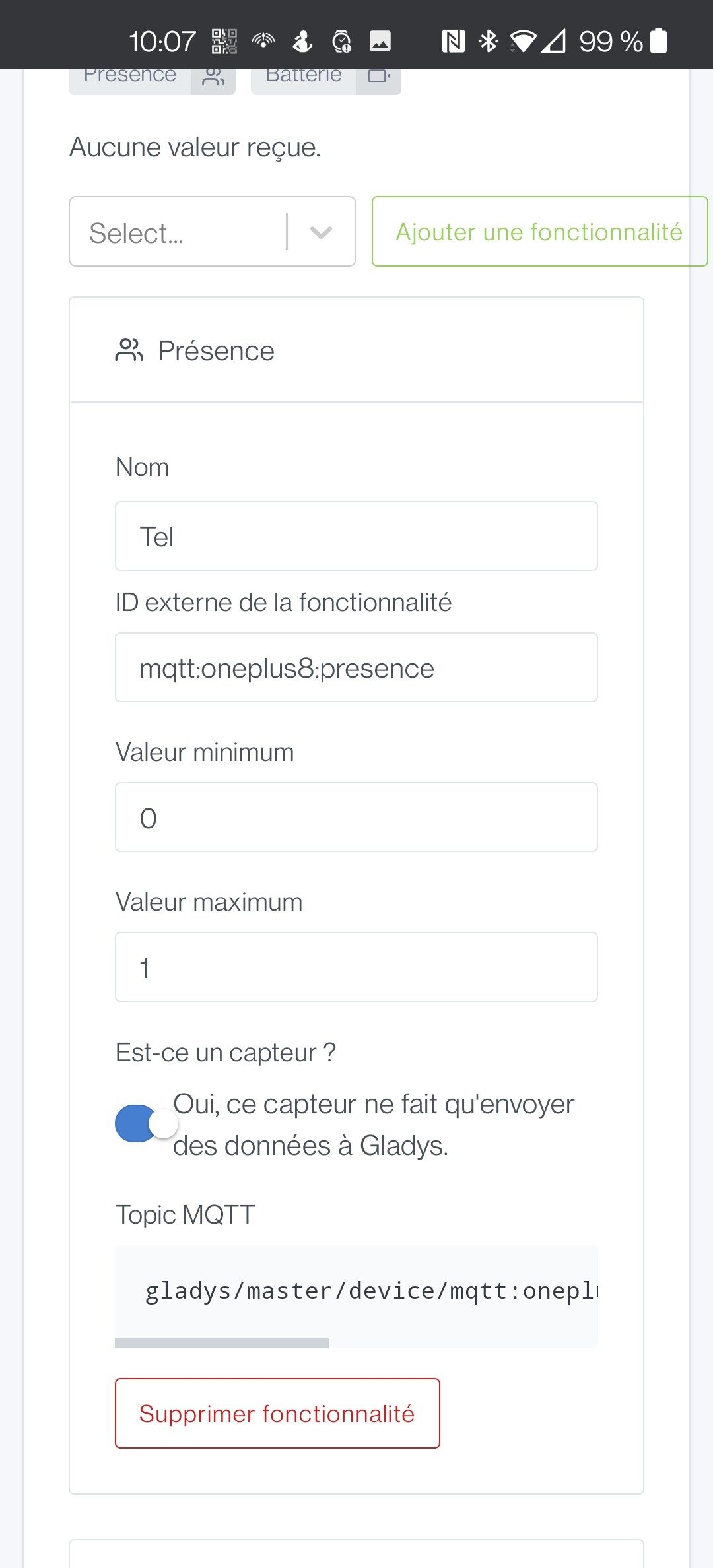
After that, I don’t exactly know what the message format and the topic this app publishes to are?
I’m just starting with these technologies, but wouldn’t it be possible to trigger someone’s absence when there’s no more « online » status update for, say, 15 minutes?
Then, on the presence publisher side,
I changed the presence value to 1 and the absence value to 0.
After that, I opened Gladys access, so I can access it even outside Wi-Fi.
But it shouldn’t be complicated for @pierre-gilles to create an API on the g+ side to set a value to 0 or 1 for a device or simply set absent or present when g+ receives the values via API?
I’m new to Gladys, I’m taking the liberty to intervene on this post regarding the initial request for presence detection. In my current system (I won’t name it, but it runs on a PI4), I use Nut detection and also Ping detection for phones (the MAC address), which works perfectly well. Wouldn’t it be possible to do the same in Gladys, a module to ping IP or MAC addresses? I find it more practical than going through a third-party application.
Hello and welcome, your request has already been mentioned
The issue is that if the box reboots, you will change IP, and I no longer remember this discussion but there was also something that mentioned the MAC address changing as well… Read the discussion and you will be fixed
I haven’t tested it yet, as I don’t have Gladys Plus, I connect to my instance at home via VPN. So it’s more restrictive, but I will think again about the subject for my particular case.


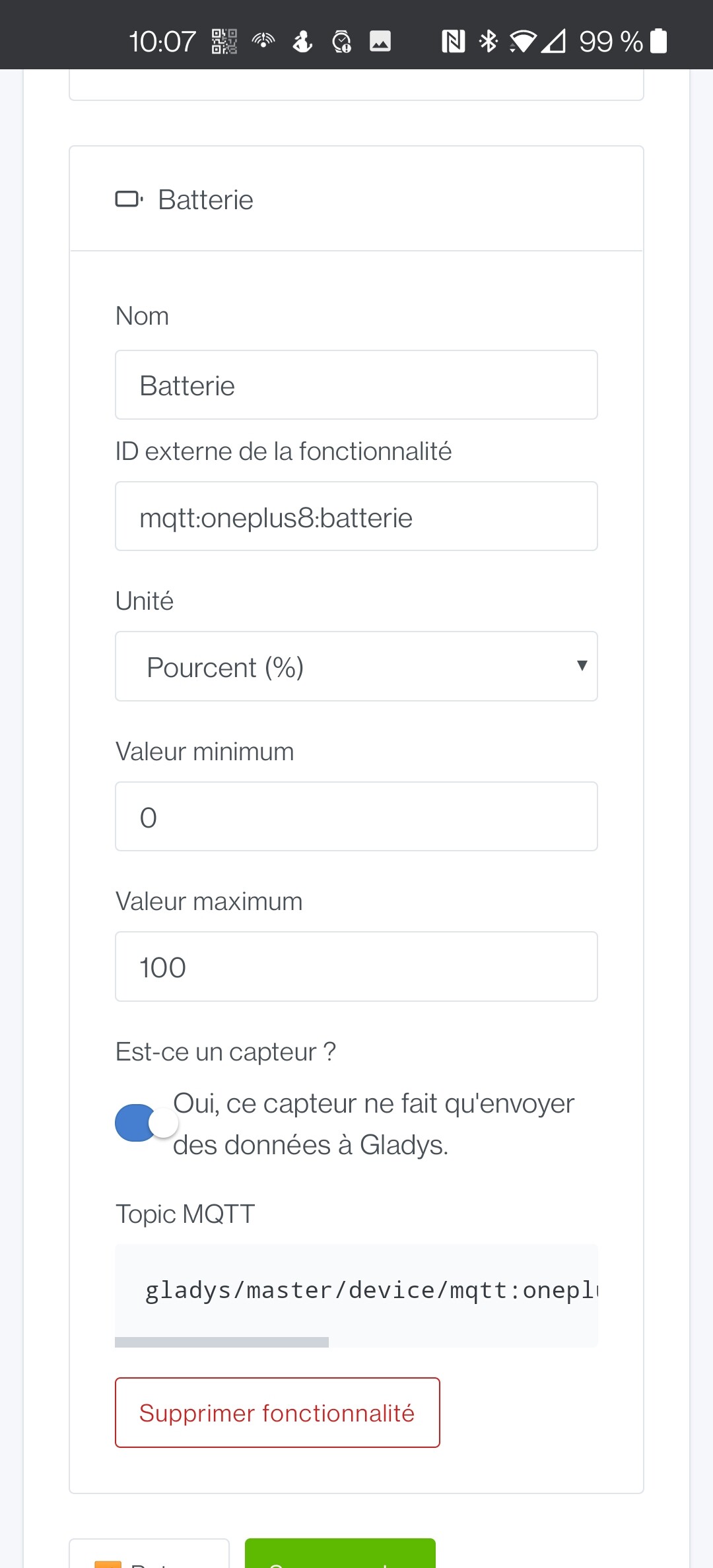
 If there is demand for this kind of feature on Gladys Plus, I’ll add it without any problem


